About The Book
About The Book
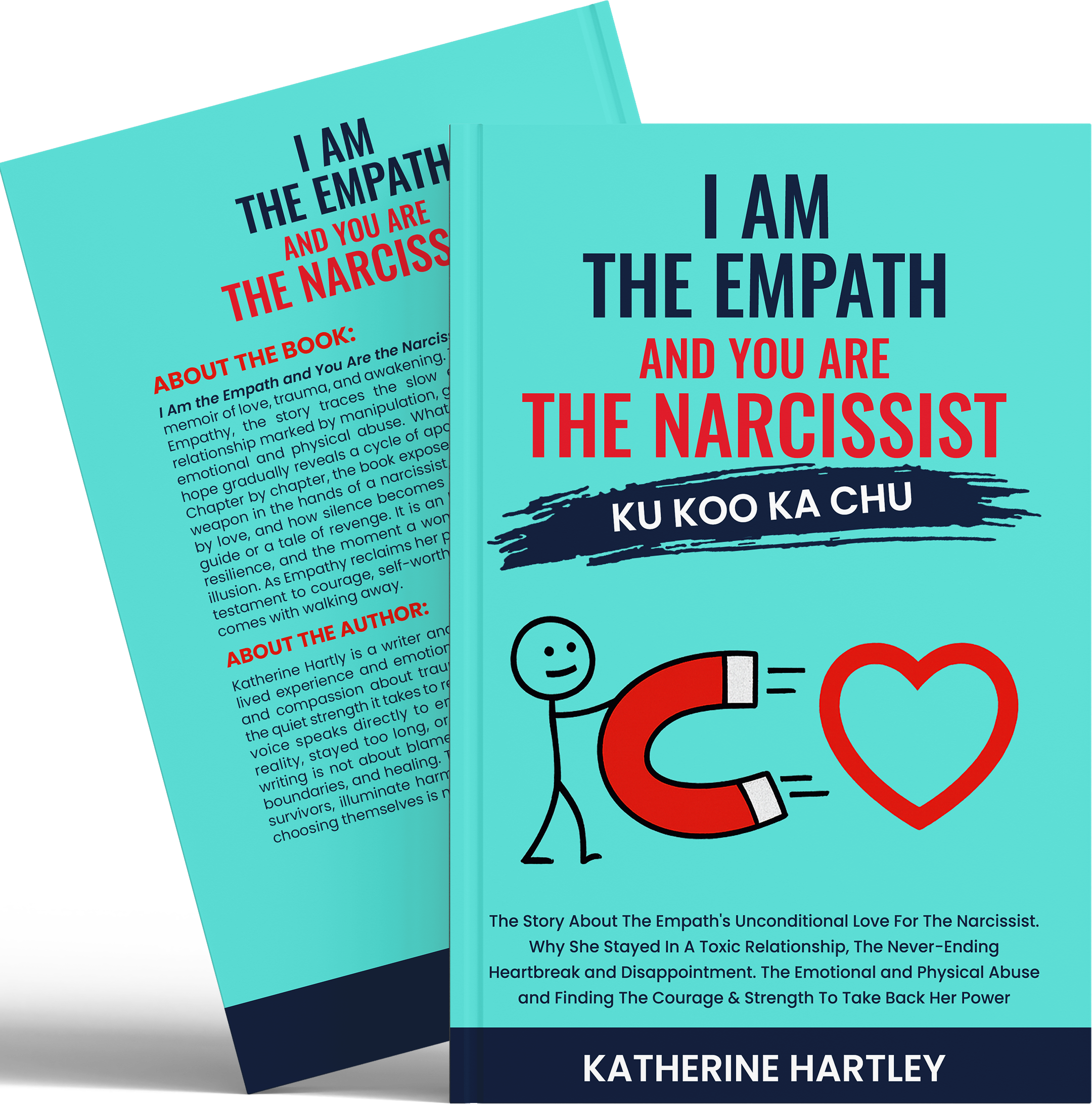
I AM THE EMPATH
AND YOU ARE THE NARCISSIST
Empathy did not fall for a monster. She fell for a charming, attentive man who played guitar, gave thoughtful gifts, and said all the right things. Like many of us, she was raised on fairytales and romance stories, so when Mani arrived with flowers, late calls, and big declarations, it felt like an answered prayer, not a warning.
Chapter by chapter, “I Am the Empath, and You Are the Narcissist” walks us through what happens after the love bombing stage. We see the first snap in his voice when she simply asks, “What’s wrong?” We feel the shock of being told to leave in the middle of the night, the humiliation of circling in her car with nowhere to go, and the confusion of being pulled back.
Family weddings, Thanksgiving dinners, and Christmas mornings become scenes where Mani’s moods control the room. Empathy starts apologizing for things she did not cause, tiptoeing around triggers she does not understand, and quietly abandoning her values just to keep the peace. Hotels become her “second home” when the rage and name-calling get too loud.
This book does not rush her healing or offer neat answers. Instead, it lays bare the cycle of being lifted up, torn down, and briefly soothed again. It shows why the bond can feel strong, why leaving is never simple, and how an empath begins the hard, necessary inner work of choosing themselves, even while their heart still aches.
Empathy did not fall for a monster. She fell for a charming, attentive man who played guitar, gave thoughtful gifts, and said all the right things. Like many of us, she was raised on fairytales and romance stories, so when Mani arrived with flowers, late calls, and big declarations, it felt like an answered prayer, not a warning.
Chapter by chapter, “I Am the Empath, and You Are the Narcissist” walks us through what happens after the love bombing stage. We see the first snap in his voice when she simply asks, “What’s wrong?” We feel the shock of being told to leave in the middle of the night, the humiliation of circling in her car with nowhere to go, and the confusion of being pulled back.
Family weddings, Thanksgiving dinners, and Christmas mornings become scenes where Mani’s moods control the room. Empathy starts apologizing for things she did not cause, tiptoeing around triggers she does not understand, and quietly abandoning her values just to keep the peace. Hotels become her “second home” when the rage and name-calling get too loud.
This book does not rush her healing or offer neat answers. Instead, it lays bare the cycle of being lifted up, torn down, and briefly soothed again. It shows why the bond can feel strong, why leaving is never simple, and how an empath begins the hard, necessary inner work of choosing themselves, even while their heart still aches.
WHY READ IT
I AM THE EMPATH
AND YOU ARE THE NARCISSIST
You might already know the terms “empath” and “narcissist.” You may have watched videos, read articles, or taken quizzes. Yet somehow, you still find yourself wondering, “Is it really that bad?” or “Is it my fault?”
“I Am the Empath, and You Are the Narcissist” will not talk down to you or rush you. It lets you sit in the real moments: the slammed doors, the middle-of-the-night drives, the hotel rooms, the quiet mornings after another apology. You see how smart, kind people get pulled into the cycle, and why leaving is not just a matter of courage.
You might already know the terms “empath” and “narcissist.” You may have watched videos, read articles, or taken quizzes. Yet somehow, you still find yourself wondering, “Is it really that bad?” or “Is it my fault?”
“I Am the Empath, and You Are the Narcissist” will not talk down to you or rush you. It lets you sit in the real moments: the slammed doors, the middle-of-the-night drives, the hotel rooms, the quiet mornings after another apology. You see how smart, kind people get pulled into the cycle, and why leaving is not just a matter of courage.